Why getting the right Bicycle and Setup for YOU is so important

I will start this post off like an old school essay and give you a the definition of cycling (in case you were unsure:
Nowadays and especially in South Africa, the sport of cycling has taken off in a big way and it is fantastic to see how many people are getting active in the sport. This means more hours on the road or in the mountain in the same position doing the same movement.
For example:
If you have an average of 75 revolutions of the pedal per minute (about normal) and you go for a short 60 minute cycle. That means that you are turning your legs over 4500 times in that stint. That is a lot of repetitive movement that your body is doing to itself. This means that even the smallest misalignment in the your setup will steadily put more and more pressure on you as you continue doing the same movement.
This equals, pain, leading to overcompensation, leading to pain, leading to repetitive injuries, leading to (surprisingly enough) more pain. I feel it is pretty obvious that no one really wants pain when cycling so it seems like the best idea to get your set up correct from the get go.
I want to keep this post relatively short so I am only going to touch on a few main points for a Bicycle Set up:
1. Bicycle Size
Most people will consider this quite obvious, but your bicycle size could change between road and mountain and even with different brands, so you can’t simply google the answer and decide that a specific bike will work for you off the bat. I road a Medium Road Bicycle frame for years before changing down to a small. To be honest I never thought I had a problem on the Medium, until I changed. Suddenly the effort going into my rides was ten times less than before (and I didn’t even know what I was missing).
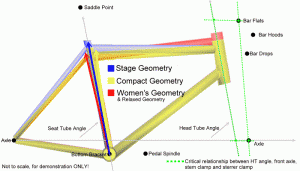
2. Saddle Height
Your saddle height plays a major role in which muscles work harder during your cycle as well as your back position. You obviously don’t want to overdo certain muscles and not use others and it is crucial that you do not put unnecessary pressure on your back, especially when climbing hills.
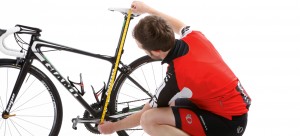
Main problem area’s
- Overworked Quads
- Tight Hamstrings
- Hip Flexor Pain
- Lower Back Pain
3. Saddle For/Aft
This is how far forward/back your saddle is when compared to the handlebars. One of the big things here is the amount of power you are able to push into your pedals relative to the amount of energy your are using. It also plays a massive role in how comfortable you are on the saddle and affects the angle that your pelvis sits on the saddle.
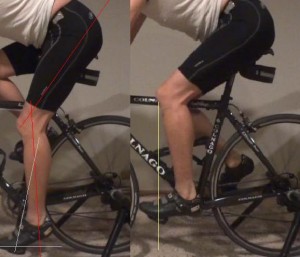
Main problem area’s
- Knee Pain
- Tired arms and shoulders
- Tight Hip flexors
4. Handlebar position
This is obviously very different between Road Bicycles versus Mountain bicycles and focus on a few different aspects, but we are not going to delve too deep into that. A correct set up will allow you to handle the bicycle with ease and comfort, especially with regards to agility and braking. Serious riders will have a more “aggressive” racing style, so don’t have a look at what the pro’s are doing and try and copy that onto your bike if you are a beginner. You could end up head over the bars. The height of the bar, length of the stem and bar width are all factors here and of course, the positioning of your brakes on the bar.
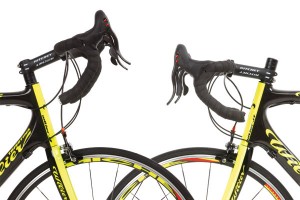
Main problem area’s
- Neck Pain
- Shoulder Blade Pain
- Shoulder and Arm Stiffness
- Upper Back Pain
5/6 and 7.
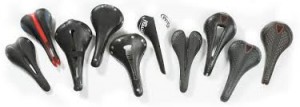
Type of Saddle – (there are so many different styles and shapes, find the one for you, it could change your life)
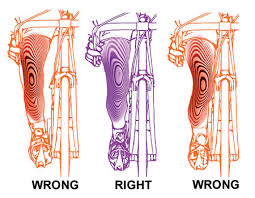
Cleat Position – Do you walk duck footed or pigeon toed?) this makes a big impact in how
your knee’s move, a simple cleat adjustment will enable you to cycle with your knee’s stacked over your ankles to ensure the right force through the joints.
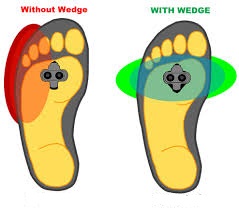
Shoes and Shims – People put a lot of thought into running shoes and use fancy words
like pronation and supination. Although we don’t do this in cycling, there are small adjustments you can make to your shoes to correct any foot alignment to ensure you don’t get numb toes or hot spots when you ride.
So what do you do with all this information?
I have specifically tried to avoid giving any norms or numbers in this post becasue the best way to get your bicycle set up is to get it done by someone who knows what they are talking about. A difference of a few millimeters really does make a difference so that is why we should leave it to the pro’s.
Already had a Set Up? – That is great news, but remember, as you get fitter, stronger and more comfortable on your bike. Muscles will develop differently and the position that you starting cycling in may have changed – so don’t be scared to go and check your set up every so often to see if there are any improvements you can make.
Just bought a new Bike? – Cyclists love new bicycles, but remember, models and makes differ in geometry and size, you cannot simply move your measurements over between two bicycles. So get yourself fitted properly to the new bike and get the most you can out of it.
Looking for a bike fitment?
Get in touch with Bike Mob – +27 21 797 3804 and make your appointment now
