Multi Day Stage Racing – How to survive (Part 2 – Muscle Recovery)
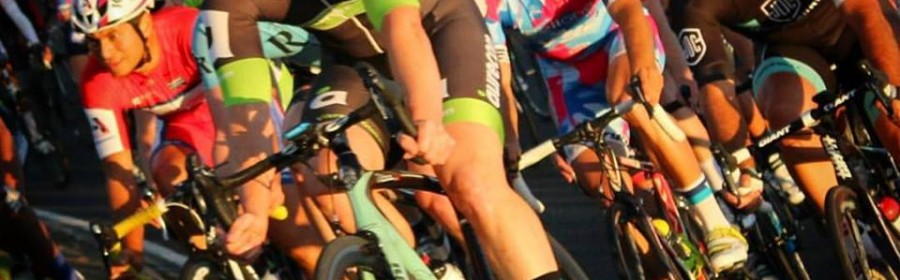
So we have covered the food and drink side of things, the “engine” of the body. Now lets look at th emoving parts.
The Muscles – your aims here are to
- Relieve muscle soreness
- Promote muscle repair and growth
- Reduce swelling
- Improve circulation
- Remove waste products/lactic acid etc.
When you over-load your muscles, either by significantly increasing the amount you exercise or by going harder or faster, the result may be microscopic tears in your muscle fibers. Over the next 24 hours after the session, the muscles should become inflamed.
This all leads to waking up the next morning stiff and sore, something that you don’t particularly want when going for 2-8 days.
So what now?
Move
Much of the muscle soreness can be relieved through gentle movement. Go for a swim, walk, slow easy spin, whatever you can to get the joints moving without putting resistance through the muscles.
Massage
Massage improves the circulation of bodily fluids. The improved circulation enhances the exchange of nutrients and waste products between the muscles and the blood. Massage also reduces swelling and stretches sore muscles.We don’t all have access to (or the budget for) professional massage; however, self-massage is quite practical.
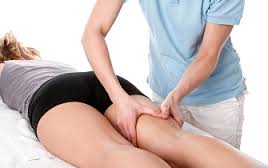
The massage should be soft an gentle if you are planning on feeling better the next day, the aim is to get blood flow increased not to pound out the knots. If you push too hard, you will regret it exercising on lead legs the next day.
Stretching
As we ride, our muscles tighten and then start to hurt. We can alleviate this by stretching before and/or after each ride. Stretching beforehand will start to warm the muscles, improve the circulation, and increase the supply of nutrients to the soon-to-be working muscles. Stretching afterwards helps to remove waste products and to speed the re-fueling of the muscles.
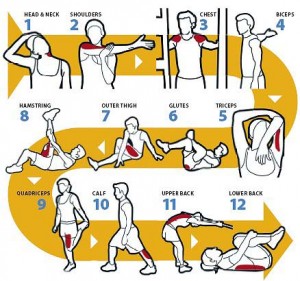
You should stretch slowly and hold a the stretch for 15 to 30 seconds. Remember to breathe. With each exhalation, relax and stretch more fully. Stretching is to increase flexibility. Don’t stretch until it hurts; the pain will cause your muscles to tighten.
See recommended stretches here
If you are pressed for time, stretching for as little as five minutes a day will yield much of the benefit of a longer session. If you can only stretch once, stretch after your workout, when your muscles are warm and more elastic.
Heat
Gentle exercise, massage, and stretching are all active techniques to warm the muscles and increase the blood flow, which will speed the removal of waste products and the replenishing of nutrients. Applying heat is a passive technique to achieve some of the same benefits. Soaking in a hot bath, sitting in a hot tub or relaxing in a sauna can help relieve tight muscles as well as relaxing you for a good night’s sleep.
If you seek heat, take a water bottle with you; you don’t want to get dehydrated! If you have inflammation (swelling), and not just sore legs, then heat is not recommended. It would increase the blood flow to the legs, rather than reducing swelling.
Icing
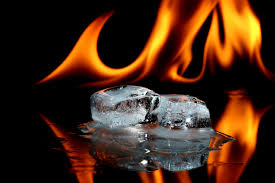
For inflammation, the most effective treatment is to apply ice to the affected body part for 15-20 minutes. If you apply ice for less time, you won’t chill the area enough to reduce the inflammation. If you apply ice much longer, the body may send blood to the affected area to prevent freezing, which will increase rather than reduce the swelling.
Applying ice can reduce the risk of injury. If you have a history of knee problems, applying ice to your knees after each hard ride can reduce inflammation so that the knees move smoothly during the next ride, rather than grating and causing injury.
Elevating the Legs
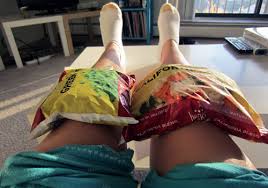
Another way to reduce inflammation is to elevate the legs, which will help the blood flow back to the core of the body. For example, you could lie on the floor with your calves resting on a couple of gear bags, so that the legs are supported and the knees are not hyper-extended. You can even do this with ice packs applied.
Your first stage race check-list
- Organize your gear the night before, so that you have a few minutes in the morning to stretch before breakfast.
- Seize opportunities to stretch on the bike or at rest stops.
- Instead of sitting in a chair eating chips and chewing the fat at the end of the day, lie with your feet on the chair while snacking.
- Before dinner stretch for a few minutes, and then after dinner take a short walk
- If you have any particularly sore areas, swap massages with your roommate and then apply ice
