Kinesiology Tape – better known as that brightly coloured stuff you see on TV a lot

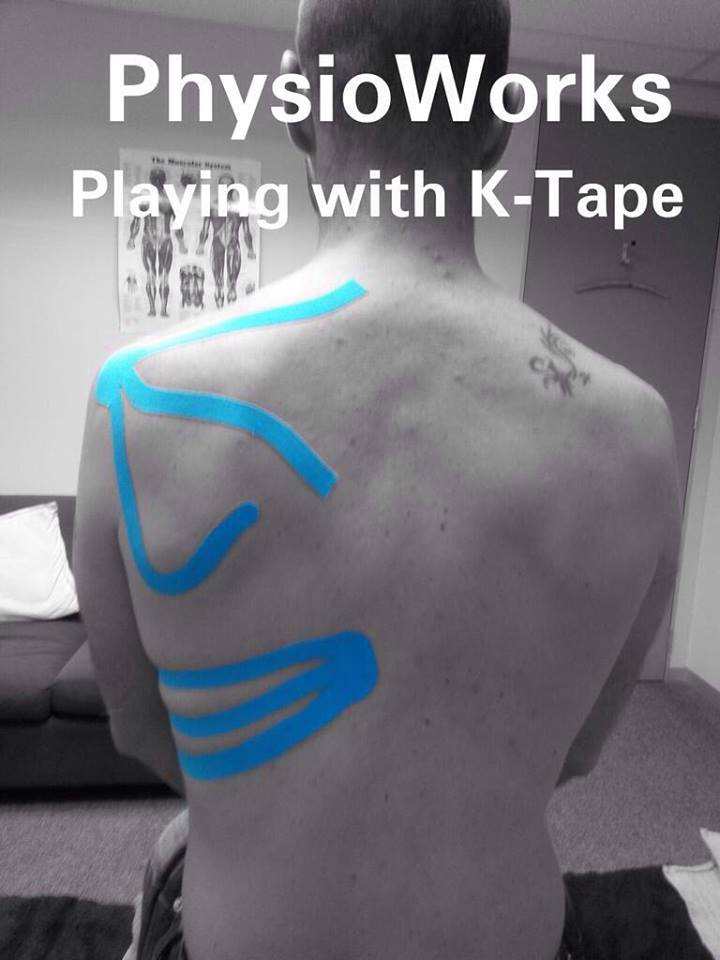
Kinesio tape is based on the idea that the body can heal itself, if enabled with appropriate support, seems pretty obvious right?
Although is not a heck of a lot of research that has gone into K-tape and all of its background, the basic gist of it is that the tape supports injured muscles and joints and helps relieve pain by lifting the skin and allowing improved blood and lymph flow.
How does it differ from the usual stuff?
Most tapes are used for static rigid support, they are used to compress muscles or restrict movement to avoud pain. This is effective for a lot of injuries but this tape cannot be left on for very long and soon you need to remove it to restire circulation and moverment to the part.K-tape is non-restrictive offering dynamic support, and allows a full range of motion whilst still offering support.
So when do I use it?
The use of Kinesio tape involves taping over muscles to minimize pain and inflammation, relax tired muscles that are suffering from overuse and to support muscle movement.
How do I use it?
It should be applied by a professional who is trained to achieve optimal effect; you can apply it yourself if you have been properly taught to do so and can reach and stretch the appropriate areas.
3 main effects of K-tape
Drainage and Blood flow increased
- The tape essentially lifts the skin off the underlying muscle leaving space for an easier flow of blood and circulation.

A picture showing a bruise, post kinesiotape, you can clearly see where the tape has helped improve drainage.
Muscle Stabilisation
- The lifting effect could (not 100% proven) help with the gliding of the muscle under the tissue, but the feel of the tape on the skin prompts awareness, and adds support to ,muscles, ligaments etc.

Kinesiotape avoids restricting movement so as not to impair your natural movements
Neurological effect
- pressure on the skin makes it more difficult for the body to feel the pain as well as the lifting of the tape on the skin reduces pressure in nerve endings
- tape over weak, sore muscles aids the bodies “active”stabilization altering neural feedback and when its placed over tight muscles is reduces the stretch response reducing soreness and tightness
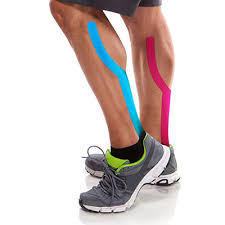
In short, research has shown that:
- Improve power and strength in uninjured muscles
- Reduce pain and improve function in painful conditions like plantar fasciitis and Patello-femoral pain.
- Improve pain, range of motion and function in people with shoulder impingement
- Raise the anaerobic threshold of muscle during endurance activity
- A recent systematic review (a research studies into a bunch of other papers on a similar topic) concluded that there was ‘moderate evidence to support the use of tape to reduce pain’

Different designs are aiming at different effects on the body.
3 things physio’s often hear about K-tape explained
I don’t like to use medication – Although I agree wholeheartedly with this statement, Kinesiotape contains no medication or drugs, it is made from a nylon and cotton blend with acrylic (this is great fro those with pesky latex allergies)
Do you have the blue one, that the one I normally use – the colours of the tape are purely aesthetic. Promise

I bought that and tried it once, it doesn’t work for me – The tape needs to be specifically applied by someone who knows what they are doing, you can’t place it on like sticky tape and expect it to work wonders, and you cant apply it like normal tape.
There are no real negative effects of the tape and the positives are great in helping you to get to your optimum, whether it be preventative or during injury.
