What your cycling knee pain means

Cycling Knee Pain
Almost all cycling injuries are overuse related – whether it be overuse because you are simply training too much or because your setup is wrong and therefor are “overusing” the wrong muscles and putting too much strain on the joints and ligaments. Here are a couple of reasons for your knee pain on the bike:
Front: Pain just under the knee-cap
This is often due to overusing your Quadriceps. The Quads form the bulk of the thigh: made up of 4 muscles that all attach over your knee cap and into your tibial tuberosity (that bump just under your knee on the top of your shin. If you think of all the power in those quadriceps muscles, running to that small point you can imagine how much force that poor little tendon must handle. When the quads work too much pain will generally start at the point of most strain and this tendon is generally what complains first.
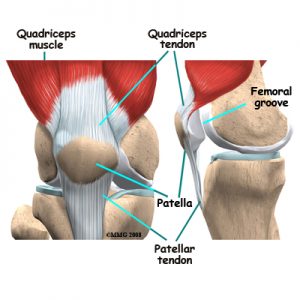
Why would this hurt:
Bicycle Setup – a saddle that is too low or too far forward will close the knee angle putting to much force through the knee cap
Pushing too many harder gears or sprinting for too long when not conditioned to it
What to do:
Correct the setup
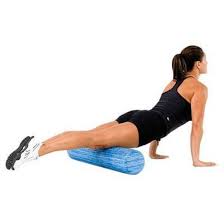
Roll/Massage/Stretch Quadriceps to release tension
Strengthen Quadriceps uniformly to ensure load is distributed evenly
Back: Pain behind the knee
Not to be mistaken for hamstring pain (this generally starts mid way up the back of the thigh). Pain directly behind the knee is often due to overextending the knee at the bottom of your pedal stroke. If you have ever been to spinning and you forget and stop pedaling, your knee’s tend to get and almighty jerk and you will feel the back of the knee complain (it doesnt want to bend that way). This pain is a lot less common as the body tends to compensate and most cyclist will feel back, hip or ITB pain before back of the knee pain.
Why would this hurt:
Bicycle Setup – a saddle that is high or too far back (in relation to your handlebars)
Riding fixie bikes too much and using hamstrings and extensors too slow down to much
Spinning at too high a cadence without resistance
What to do:
Correct the setup
Engage Hamstrings to take up more load while cycling
Strengthen hamstrings
Either Side of the Knee
Pain on the inside of your knee
The collateral ligaments of the knee make up a lot of the knee’s stability, when these are put under uneven stress they will tend to complain.
The easiest way to put your knee’s under uneven stress is if your cleat or shoe position on your pedals (if you have flats) is incorrect.
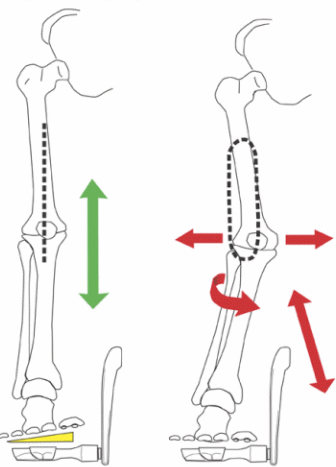
As with cycling you are putting pressure through your entire leg for pedal after pedal, if your power is not being pushed through the whole leg (down the centre of the knee and ankle) then instead of the strong bones taking up the load, the ligaments will be forced to work

Why would this hurt:
Bicycle Setup – most of the time this is due to foot and cleat positioning (as seen in the above picture correcting foot placement on the pedal)
What to do:
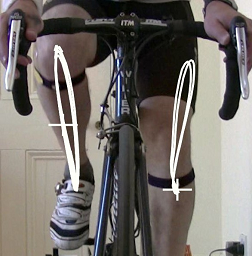
Correct the setup – cleat positioning (toes too far out or cleats too far to one side), shoe inserts to have a smooth up down motion when pedaling with no knee tracking (see pic example below)
Strengthen knee stabilisers so that you start off on a firm strong base and don’t rely too much on the ligaments
Pain on the Outside of your knee:
The reason above could also contribute to pain on the outside of your knee, but the main culprit in laterla knee pain is the ITB
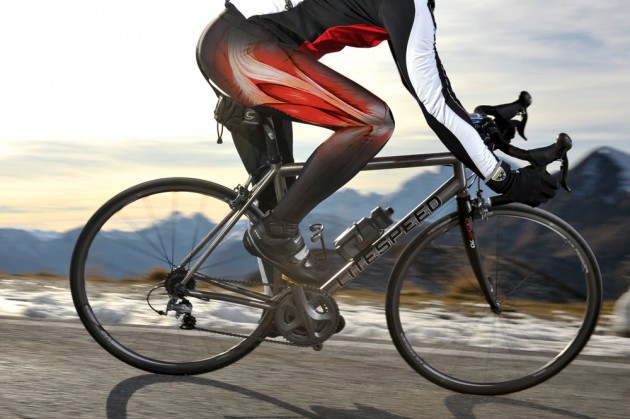
ITB Sydrome is more commonly known as runners knee, but syndromes like this do not discriminate and can affect cyclists and runners alike.
This continuous tract of tissue called the ITB runs from the hips all the way to under your knee. So if this gets tight it understandable has quite an affect on your leg. The pain pain is caused by the tight band rubbing over the side of the knee’s bony prominence and becoming inflamed.
Lets think about it:
During a pedal stroke, the band crosses over the epicondyle (bony bit on the oustside of you rknee) once on the down stroke and again on the upstroke. If a cyclist pedals at a cadence of 80rpm, this is equivalent to 160 slides per minute. Over a one-hour ride, the ITB rubs across the knee 9,600 times. – thats and awful lot of rubbing!
Why would this hurt:
Simple Overuse – doing too much for your poor muscles to take
Bicycle Setup – ‘so many things here can affect the ITB as it literally covers most of your leg
Muscle imbalance in your legs – not using the stabilisers of the legs and the biggers muscles working too hard
Leg length discrepancy – a lot of us have one leg shorter than the other, there are many ways to combat this so the best would be to get it checked by a physio or Bike fitter
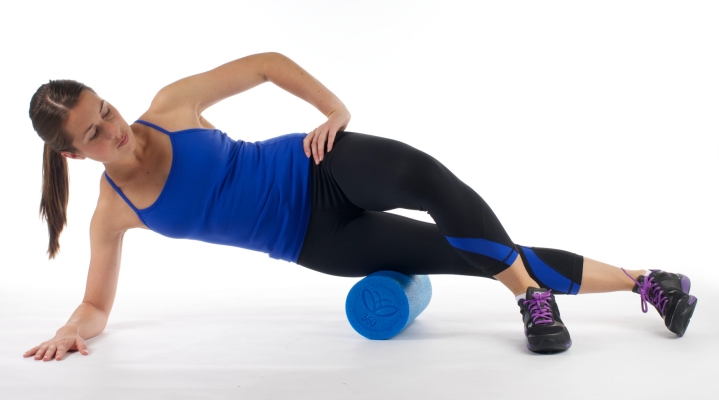
What to do:
Correct the setup
Roll/Massage ITB to release tension
Routinely work out your core and leg stabilisers for better power output and injury prevention
So whether it is setup, stiffness, inflexibility, weakness, or just plain overtraining, there is no need to be cycling with pain. Try some of these fixes or visit your nearest physiotherapist
